

Industrial Large Dry Mortar Plant Suppliers Professional China Factory
Looking for reliable China suppliers? Our factory provides a standardized Large Dry Mortar Plant for automatic pulping of dry powder materials, featuring precise measurement, uniform mixing, and stable operation for diverse industrial applications.


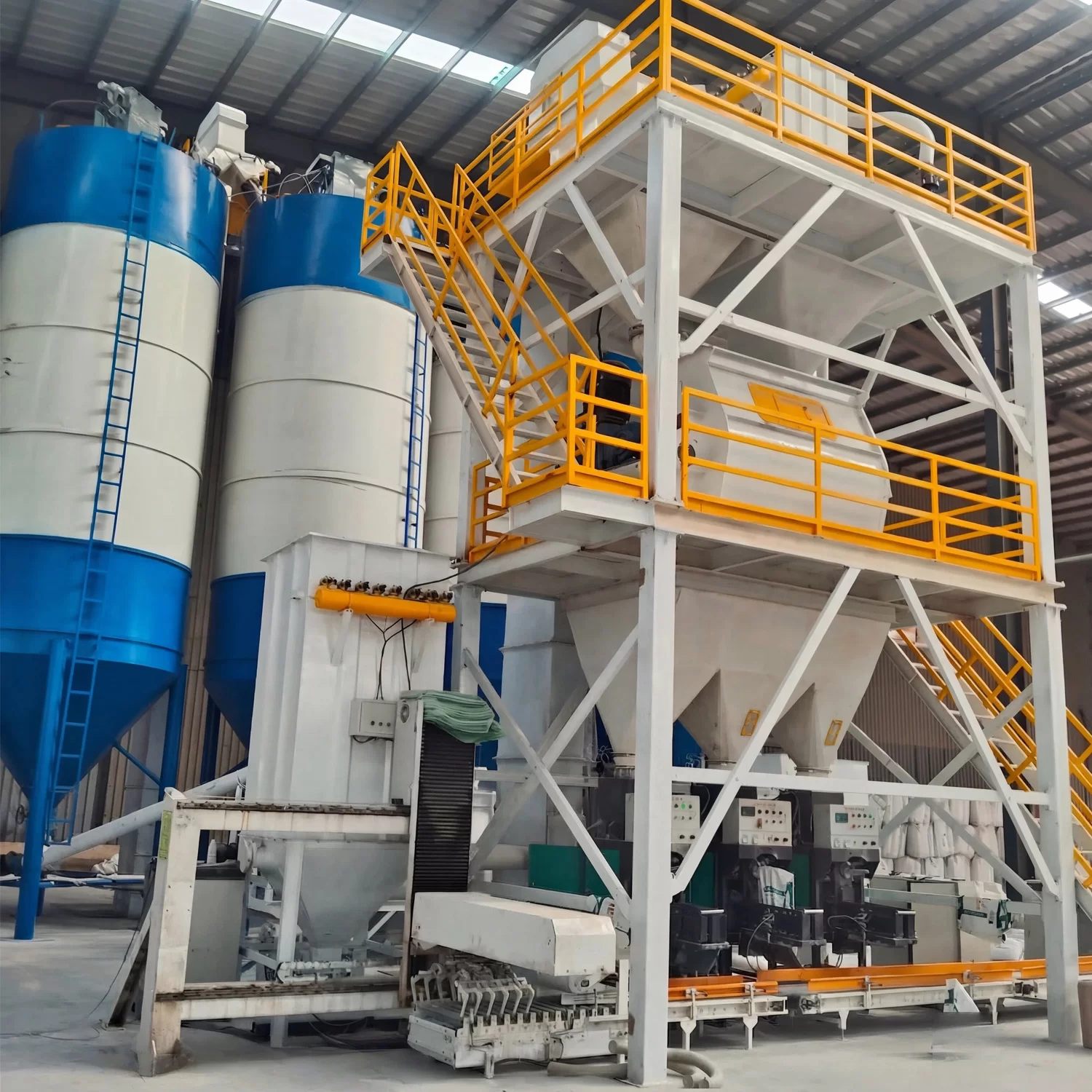
The Large Dry Mortar Plant is a state-of-the-art, fully integrated pulp making system designed for maximum efficiency in industrial slurry production. By seamlessly combining dry powder feeding, precision metering control, high-intensity mixing and dispersion, and automated slurry transportation, this system eliminates the complexities of manual processing. It is engineered to handle a wide range of dry powder materials, ensuring that every batch meets stringent industrial standards for consistency and quality.
Utilizing advanced mixing structures and precise feeding mechanisms, the plant ensures rapid wetting and complete dispersion of powders within liquid media. This critical process effectively prevents common industrial issues such as material agglomeration, floating, and sedimentation, resulting in a stable slurry concentration. With its modular design and high level of automation, the system is an ideal solution for water treatment, environmental engineering, chemical processing, and the modern building materials industry.
Detailed Parameters
| System Integration | Feeding, Metering, Mixing, Transport | Design Structure | Modular & Compact Layout |
|---|---|---|---|
| Operation Mode | Continuous or Intermittent | Control System | High-Automation PLC |
| Material Compatibility | Lime, Activated Carbon, PAC, PAM | Mixing Process | High-Efficiency Dispersion |
| Performance Goal | Zero Agglomeration & Sedimentation | Installation | Fast-Track Modular Setup |
| Industrial Application | Water Treatment & Building Materials | Operating Cost | Low-Energy Consumption |
Key Advantages
Superior Dispersion
Advanced mixing structures prevent powder clumps, ensuring a perfectly uniform slurry concentration.
High Efficiency
Optimized workflows for dry powder feeding and metering significantly reduce production cycle times.
Modular Versatility
Compact, modular design allows for easy installation and flexible scaling based on plant requirements.
Smart Automation
Integrated control systems minimize human error and ensure stable, repeatable pulp making processes.
Reliable Performance
Engineered for durability in harsh industrial environments, ensuring long-term operational stability.
Cost-Effective
Low operating costs and reduced waste make it a high-ROI investment for large-scale operations.
Product Gallery


Management Platforms
Precision Metering
Advanced sensors ensure exact powder-to-liquid ratios for every batch.
Automated Mixing
Programmable mixing cycles optimized for various powder viscosities.
Real-time Monitoring
Instant feedback on system performance and material flow rates.
Intelligent Alerts
Automatic notifications for low material levels or system maintenance.
Slurry Transport
Controlled delivery systems ensuring zero sedimentation during transit.
Modular Control
Easily adjust system parameters for different dry powder applications.
Investment Return Comparison
| Metric | Traditional Manual System | Large Dry Mortar Plant |
|---|---|---|
| Production Speed | Slow / Inconsistent | Rapid / Continuous |
| Material Waste | High (Agglomeration) | Minimal (Full Dispersion) |
| Labor Requirement | High Manual Input | Low / Automated |
| Quality Control | Variable / Batch-dependent | Stable / Standardized |
| Operational Cost | Increasingly High | Low & Optimized |
Frequently Asked Questions
Q: Which materials are best suited for this Dry Mortar Plant?
The system is highly versatile and specifically designed for dry powder materials such as lime powder, activated carbon, PAC, PAM, and other chemical or building material powders.
Q: How does the system prevent powder agglomeration?
It uses a combination of precise dry powder feeding devices and high-efficiency mixing structures that ensure materials are rapidly wetted and fully dispersed upon entering the liquid media.
Q: Is the plant suitable for continuous industrial production?
Yes, the system is designed to support both continuous and intermittent operation modes depending on your specific process requirements.
Q: How difficult is the installation and maintenance process?
Thanks to its modular design and compact structure, the plant features a small footprint and is engineered for easy installation and low-maintenance overhead.
Q: Can this system be integrated into existing water treatment plants?
Absolutely. The modular nature and automated controls make it easy to integrate into environmental engineering and water treatment facilities.
Q: What are the primary cost-saving benefits of this equipment?
Savings are achieved through reduced material waste (no floating or sedimentation), lower labor costs due to high automation, and optimized energy consumption during the mixing process.
Ready to Optimize Your Industrial Slurry Production?
Contact Us
If you are interested in us, please fill out the form
Our dedicated OUR team can help you find the right products to acceltrate your output.From design to use,We take care to all your needs.


Hit enter to search or ESC to close


