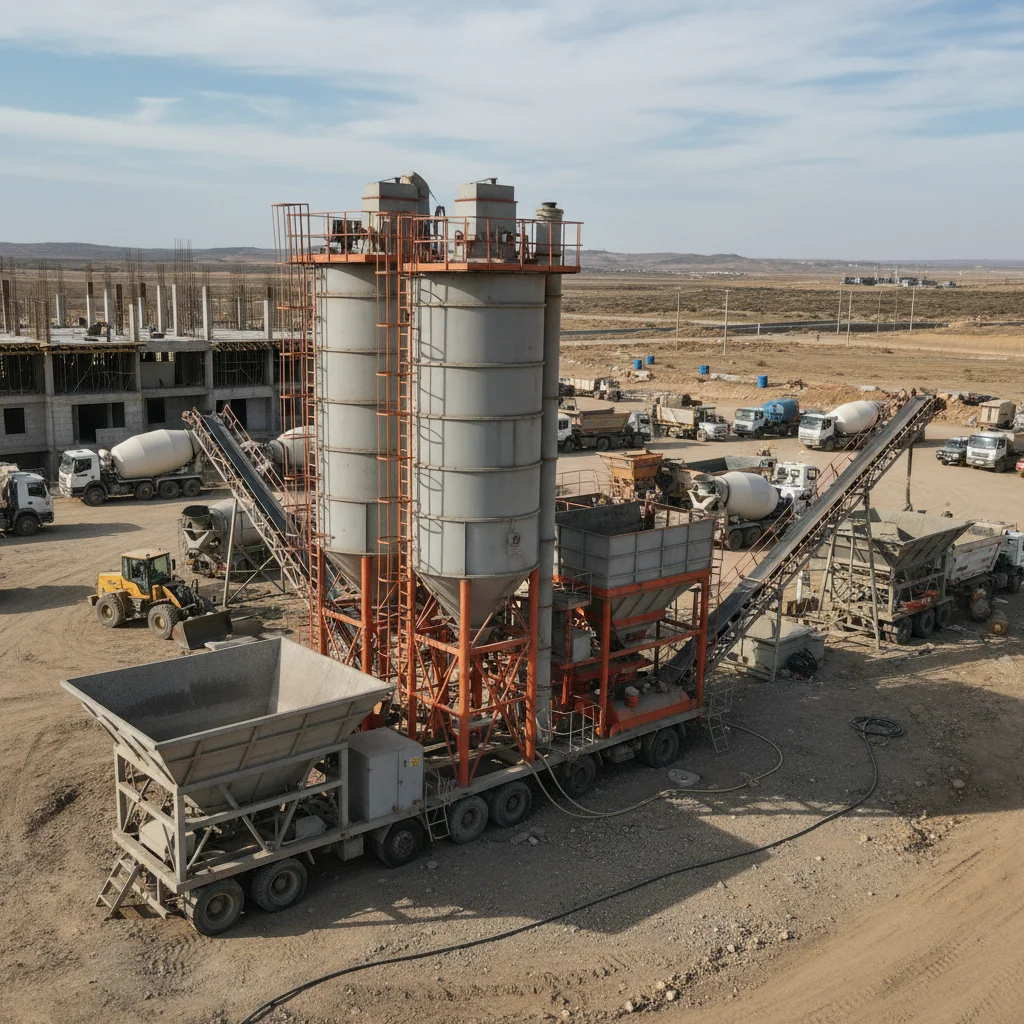
The demand for efficient and adaptable concrete production is soaring globally, driven by rapid urbanization, infrastructure development, and a growing need for sustainable building practices. Foundation-free concrete batching plants represent a pivotal advancement in this sector, offering unparalleled flexibility and cost-effectiveness, particularly in challenging terrains or projects with time constraints. This technology is revolutionizing construction methodologies and redefining the boundaries of what’s possible in concrete mixing and delivery.
These plants are increasingly crucial for projects requiring mobility and rapid deployment, such as remote construction sites, disaster relief operations, and large-scale infrastructure initiatives. The ability to establish a fully functional concrete production facility without extensive groundwork significantly reduces project timelines and associated costs, making it an attractive solution for contractors and developers alike. Understanding the nuances of foundation-free concrete batching plants is vital for anyone involved in modern construction.
The core benefit lies in their portability and ease of setup. Unlike traditional concrete batching plants, these systems minimize site preparation, eliminating the need for substantial foundations. This translates into significant savings in both time and resources, while also reducing environmental impact. As the construction industry evolves, foundation-free solutions will play an increasingly prominent role in shaping the future of concrete production.
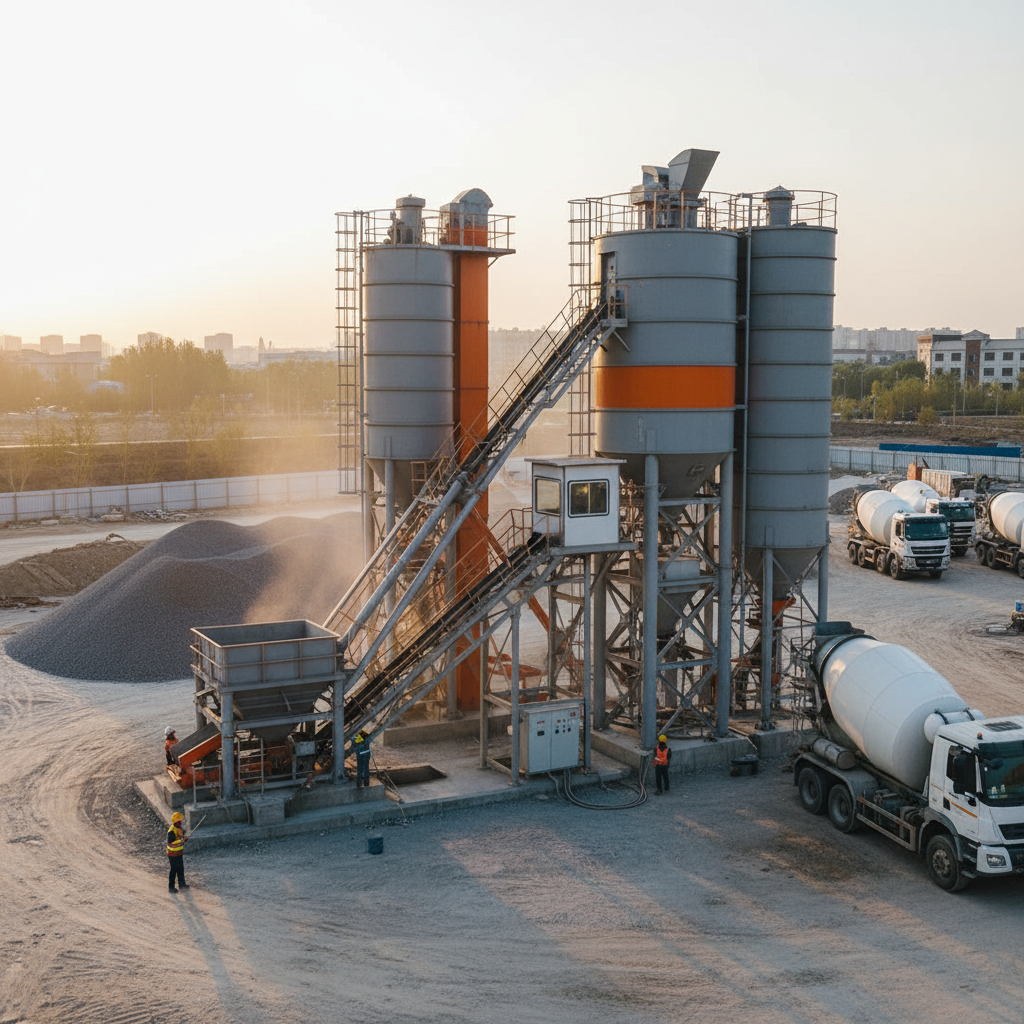
Introduction to Foundation-Free Concrete Batching Plants
Foundation-free concrete batching plants are becoming indispensable tools in modern construction projects. They provide a solution to the logistical challenges often associated with establishing concrete production on-site, particularly in locations where traditional methods are impractical or prohibitively expensive. This is especially true in areas with unstable ground conditions, limited access, or strict environmental regulations.
Their ability to be quickly deployed and relocated makes them ideal for a wide range of applications, from infrastructure projects in developing countries to emergency construction following natural disasters. The elimination of the need for substantial foundations not only reduces costs and time but also minimizes the environmental footprint of the construction process, aligning with the growing global emphasis on sustainable building practices.
Defining Foundation-Free Concrete Batching Plants
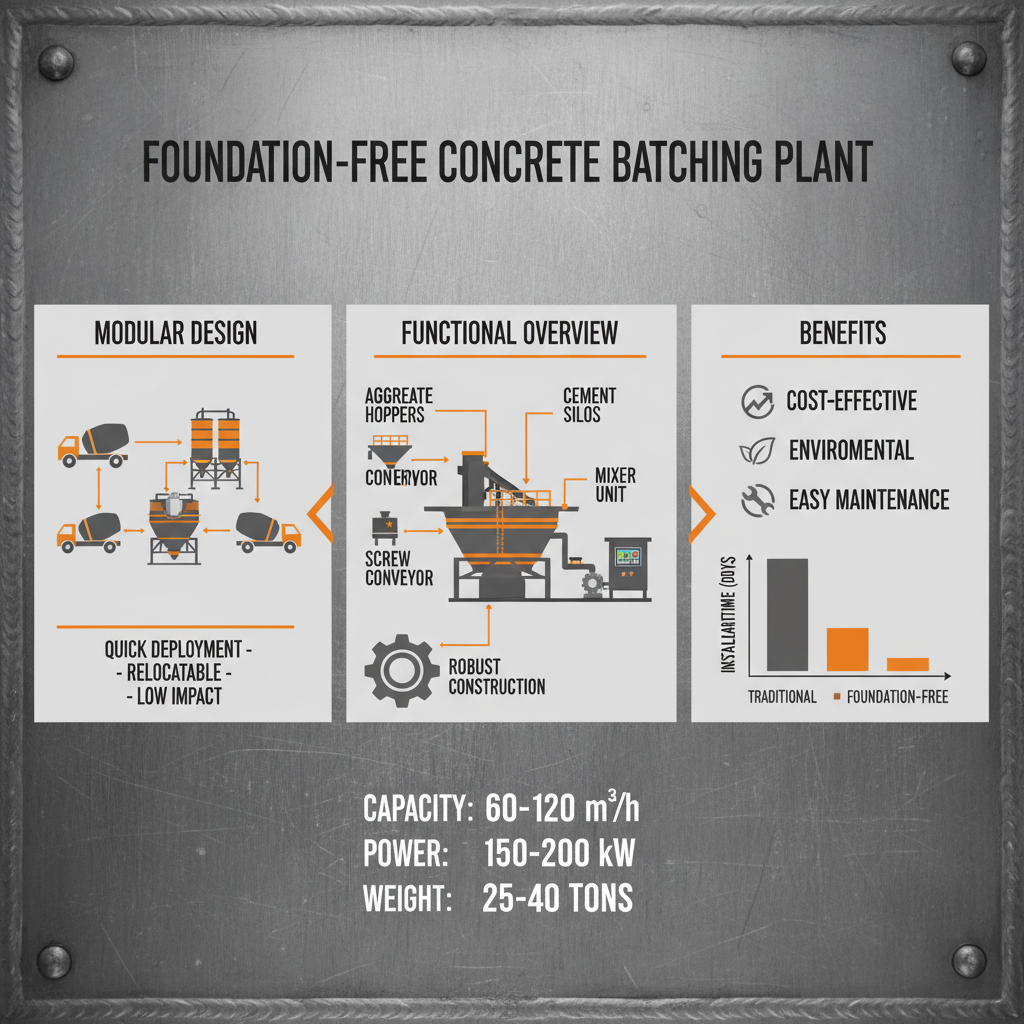
A foundation-free concrete batching plant, at its core, is a mobile or semi-mobile concrete mixing facility designed to operate without the need for a permanent concrete foundation. Traditional batching plants require extensive site preparation, including pouring a substantial concrete pad to support the heavy equipment. Foundation-free plants, however, utilize a self-supporting structure and distribution system, often incorporating a robust frame and leveling capabilities to ensure stability.
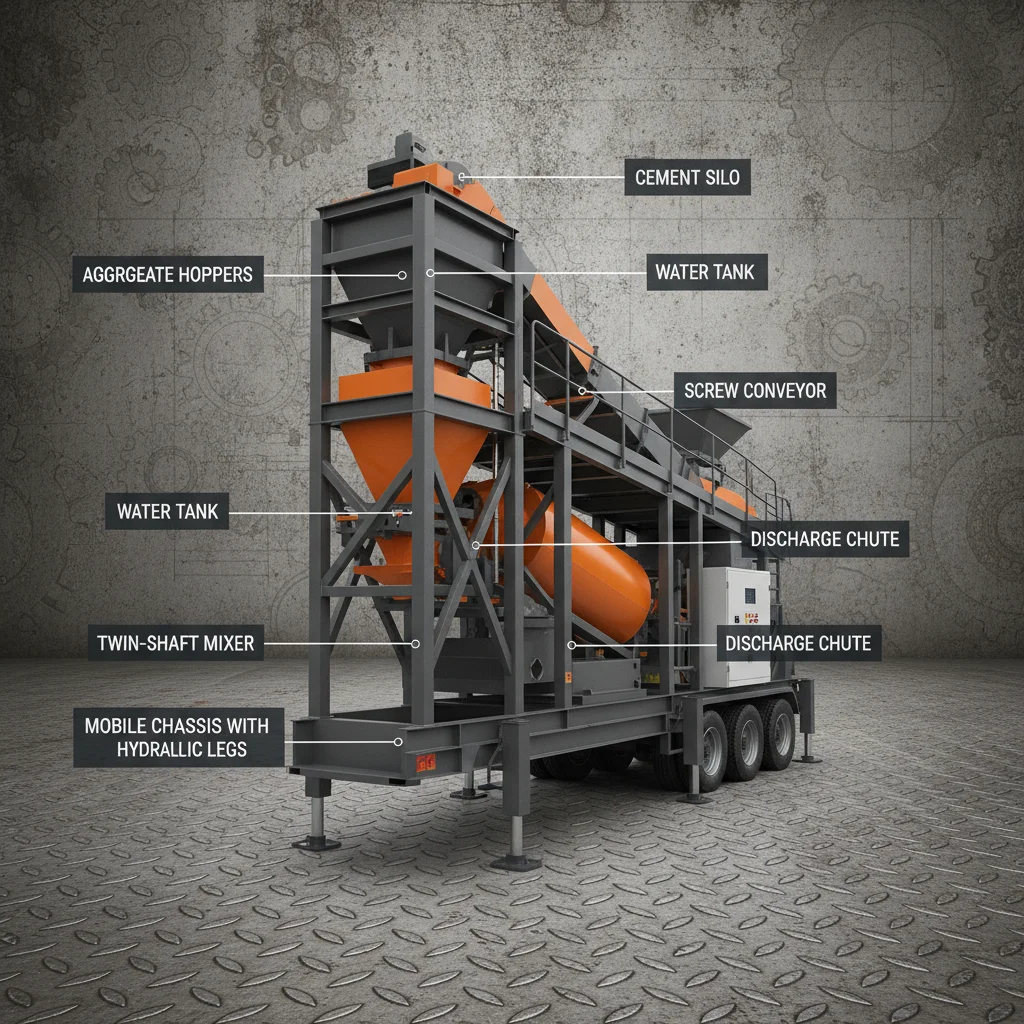
This is achieved through careful engineering and the use of high-strength materials. The entire plant—including mixers, aggregate bins, cement silos, and control systems—is typically mounted on a trailer or a pre-fabricated steel base. The design prioritizes portability and quick assembly, reducing setup time from weeks to days, or even hours, depending on the model and complexity.
The connection to modern industry is direct and crucial. With the increasing demand for infrastructure in remote locations and the need for rapid response capabilities in disaster scenarios, foundation-free plants address a critical gap in the market. They align with the principles of lean construction, minimizing waste and maximizing efficiency, ultimately contributing to more sustainable and cost-effective building projects.
Core Components and Operational Principles
The effectiveness of a foundation-free concrete batching plant hinges on the synergy of several key components. The central element is the concrete mixer – typically a planetary mixer or a pan mixer – which ensures homogenous mixing of cement, aggregates, water, and admixtures. Alongside the mixer, accurate weighing systems for each ingredient are crucial for maintaining concrete quality. Aggregate bins, cement silos, and water tanks provide the necessary storage for raw materials.
Beyond the core mixing components, a sophisticated control system manages the entire batching process. This system often incorporates programmable logic controllers (PLCs) and human-machine interfaces (HMIs) to automate weighing, mixing sequences, and material flow. A robust chassis and leveling system ensure stability during operation, even on uneven terrain. Proper dust control measures are also essential to maintain a safe and healthy working environment.
Operationally, these plants work by receiving raw materials, accurately weighing them based on pre-defined mix designs, and then feeding them into the mixer. The mixer blends the ingredients to create concrete, which is then discharged into trucks or other delivery systems. The entire process is monitored and controlled by the central control system, ensuring consistency and quality. The ability to adjust mix designs on-the-fly adds to the plant's versatility.
Performance Metrics of Foundation-Free Batching Plants
Evaluating the performance of a foundation-free concrete batching plant requires consideration of several key metrics. Output capacity – measured in cubic meters per hour – is a primary indicator of the plant's productivity. Accuracy of batching, typically assessed by the deviation from the target mix design, directly impacts the concrete's quality and consistency.
Another critical metric is setup time – the duration required to fully deploy and commission the plant at a new location. Mobility, reflecting the ease and speed of transportation, is particularly important for projects requiring frequent relocation. Maintenance requirements, including downtime for repairs and the cost of spare parts, also contribute to the overall cost of ownership.
Foundation-Free Concrete Batching Plant Performance Indicators
Global Applications and Industry Adoption
Foundation-free concrete batching plants are gaining traction across diverse industries globally. In the construction sector, they are heavily utilized for infrastructure projects such as roads, bridges, and tunnels, especially in remote or challenging terrains where establishing a traditional plant would be impractical. The mining industry benefits from their ability to provide on-site concrete for foundations, support structures, and containment areas.
Humanitarian organizations increasingly employ these plants in disaster relief efforts, enabling the rapid production of concrete for temporary shelters, sanitation facilities, and infrastructure repair. For example, following earthquakes or hurricanes, a foundation-free plant can be quickly deployed to provide a vital source of construction materials. In regions with limited infrastructure, they are also utilized for building schools, hospitals, and other essential facilities.
Geographically, adoption is particularly strong in developing countries where infrastructure development is accelerating, and in regions with frequent natural disasters. However, their use is expanding in developed nations as well, driven by the demand for sustainable construction practices and the need for efficient project delivery.
Advantages and Long-Term Value Proposition
The advantages of investing in a foundation-free concrete batching plant extend far beyond initial cost savings. The reduced site preparation requirements significantly lower project timelines, allowing for faster completion and quicker return on investment. The portability of these plants minimizes transportation costs and allows for flexible deployment across multiple project sites.
From a sustainability perspective, foundation-free plants reduce environmental impact by minimizing land disturbance and material waste. Their efficient operation and precise batching control contribute to concrete quality and durability, resulting in longer-lasting structures. Moreover, the reduced reliance on external concrete suppliers enhances project independence and control.
Future Trends and Technological Advancements
The future of foundation-free concrete batching plants is poised for further innovation. Integration with Building Information Modeling (BIM) technology will enable seamless design and construction workflows, optimizing concrete mix designs and material utilization. The adoption of automation and robotics will enhance efficiency and reduce labor costs.
Remote monitoring and predictive maintenance systems, powered by the Internet of Things (IoT), will minimize downtime and extend plant lifespan. Research into alternative cementitious materials and sustainable concrete mixes will further reduce the environmental footprint of concrete production. The development of more compact and energy-efficient plant designs will also be a key focus.
The convergence of these technologies will lead to more intelligent, sustainable, and cost-effective foundation-free concrete batching solutions, shaping the future of construction worldwide. The trend towards "smart" construction sites will further accelerate the adoption of these advanced systems.
Challenges and Solutions
While offering numerous benefits, foundation-free concrete batching plants are not without their challenges. Ensuring stability on uneven terrain can require careful site assessment and the use of advanced leveling systems. Managing dust control effectively is crucial to maintain a safe and compliant working environment.
Another potential challenge lies in sourcing consistent quality raw materials in remote locations. Establishing reliable supply chains and implementing rigorous quality control procedures are essential. Finally, skilled personnel are needed to operate and maintain these sophisticated plants, requiring ongoing training and development.
Summary of Challenges and Solutions for Foundation-Free Concrete Batching Plants
| Challenge |
Impact on Operations |
Potential Solution |
Implementation Cost (Scale 1-10) |
| Uneven Terrain |
Plant instability and inaccurate batching |
Advanced leveling systems, site preparation |
6 |
| Dust Control |
Health and safety hazards, environmental non-compliance |
Effective dust suppression systems, enclosed conveyors |
5 |
| Raw Material Sourcing |
Variable concrete quality, supply chain disruptions |
Strategic sourcing, quality control protocols |
7 |
| Skilled Labor |
Operational errors, maintenance issues |
Comprehensive training programs, ongoing support |
4 |
| Power Supply |
Interrupted operation, production delays |
Backup generators, energy storage solutions |
8 |
| Transportation Logistics |
Delays in plant relocation, increased costs |
Efficient transportation planning, optimized logistics |
6 |
FAQS
Foundation-free plants offer significant advantages in terms of cost savings, speed of deployment, and flexibility. Eliminating the need for a concrete foundation reduces initial investment and setup time dramatically. Their portability allows for easy relocation to different project sites, making them ideal for projects with changing needs or remote locations. They also minimize environmental disruption compared to extensive site preparation for traditional plants.
While they eliminate the need for a full concrete foundation, some site preparation is still required. The ground should be reasonably level and compacted to ensure plant stability. Minor grading may be necessary. It's also crucial to ensure adequate access for delivery of raw materials and concrete trucks. A thorough site assessment is recommended to identify any potential challenges and plan accordingly.
The lifespan of a foundation-free concrete batching plant depends heavily on its quality, maintenance, and operational conditions. With proper care and regular maintenance, a well-built plant can reliably operate for 10-15 years or even longer. Investing in high-quality components and implementing a preventative maintenance program are key to maximizing its lifespan and minimizing downtime.
Operational costs include raw materials (cement, aggregates, water), energy consumption, labor, maintenance, and transportation. Energy efficiency is a significant factor, so selecting a plant with optimized power consumption is important. Regular maintenance helps prevent costly repairs. Labor costs depend on the level of automation. Accurate tracking of these costs is essential for profitability.
Yes, depending on the location, various environmental and operational permits may be required. These can include air quality permits (to control dust emissions), water discharge permits, and noise level restrictions. It’s crucial to check with local authorities and comply with all applicable regulations before commencing operation to avoid penalties and ensure responsible environmental stewardship.
Proper concrete washout and waste management are essential for environmental compliance. Foundation-free plants typically incorporate dedicated washout systems to separate and recycle excess concrete and cleaning water. Waste materials should be disposed of responsibly in accordance with local regulations. Implementing a closed-loop system minimizes water usage and reduces environmental impact.
Conclusion
Foundation-free concrete batching plants represent a transformative technology in the construction industry, offering unparalleled flexibility, cost-effectiveness, and sustainability. Their ability to overcome logistical challenges and accelerate project timelines makes them an increasingly vital asset for contractors, developers, and humanitarian organizations alike. As the demand for efficient and adaptable concrete production continues to grow, these plants are poised to play an even more prominent role in shaping the future of construction.
Looking ahead, continued innovation in automation, materials science, and digital integration will further enhance the performance and value of foundation-free concrete batching plants. Embracing these advancements will empower construction professionals to build more efficiently, sustainably, and responsibly. To explore how a foundation-free concrete batching plant can benefit your next project, visit our website: foundation-free concrete batching plant.