Look, I’ve spent the last twenty years breathing concrete dust and watching construction projects unfold. And let me tell you, one thing that consistently slows us down, adds cost, and frankly, is a pain in the neck is setting up a concrete plant. Traditional setups? Weeks of groundwork, permits, and a whole lot of headaches. That’s where the foundation-free fast-assemble concrete plant comes in. It's not just a new piece of equipment; it's a fundamentally different approach to getting concrete where you need it, when you need it, without all the usual red tape and delays. This changes everything for smaller projects, remote locations, and emergency situations.
We’re constantly battling timelines and budgets. Delays cost money, plain and simple. The beauty of a foundation-free setup is speed. You’re not pouring concrete for the concrete plant, you're assembling it, often in a matter of days, sometimes even less. And it’s not just about speed. It’s about flexibility. Need to move the plant to a different part of the site? No problem. Got a project in a location with challenging ground conditions? This is your solution. The reduction in site preparation also significantly lowers environmental impact, which is becoming increasingly important.
I've seen too many projects bogged down in logistics. Getting the right mix, at the right time, to the right place – it’s a constant struggle. A properly configured foundation-free plant tackles that head-on. It streamlines the entire process, improving efficiency and reducing waste. Frankly, it’s a game-changer for contractors who want to stay competitive and deliver projects on time and within budget. This isn't some theoretical tech; it's a practical solution to real-world problems that I and my teams face every single day.
The Rise of Foundation-Free Fast-Assemble Concrete Plants
We're seeing a massive push towards prefabrication and modular construction globally, driven by a need for speed, efficiency, and reduced costs. According to a 2023 report by the World Bank, demand for affordable housing is increasing exponentially, particularly in developing nations. Traditional concrete plants just can’t keep up with this pace, especially in areas with limited infrastructure. Foundation-free fast-assemble concrete plants are filling that gap. They provide a viable solution for localized concrete production, reducing transportation costs and environmental impact.
I’ve been on sites where transporting concrete alone eats up a significant chunk of the project budget. And that's before you factor in potential delays due to traffic or weather. Having a plant right on-site eliminates those headaches. It's about taking control of the supply chain and ensuring a consistent, high-quality concrete supply. This isn't just about convenience; it's about fundamentally reshaping how we approach construction projects.
Defining Foundation-Free Fast-Assemble Concrete Plant Technology
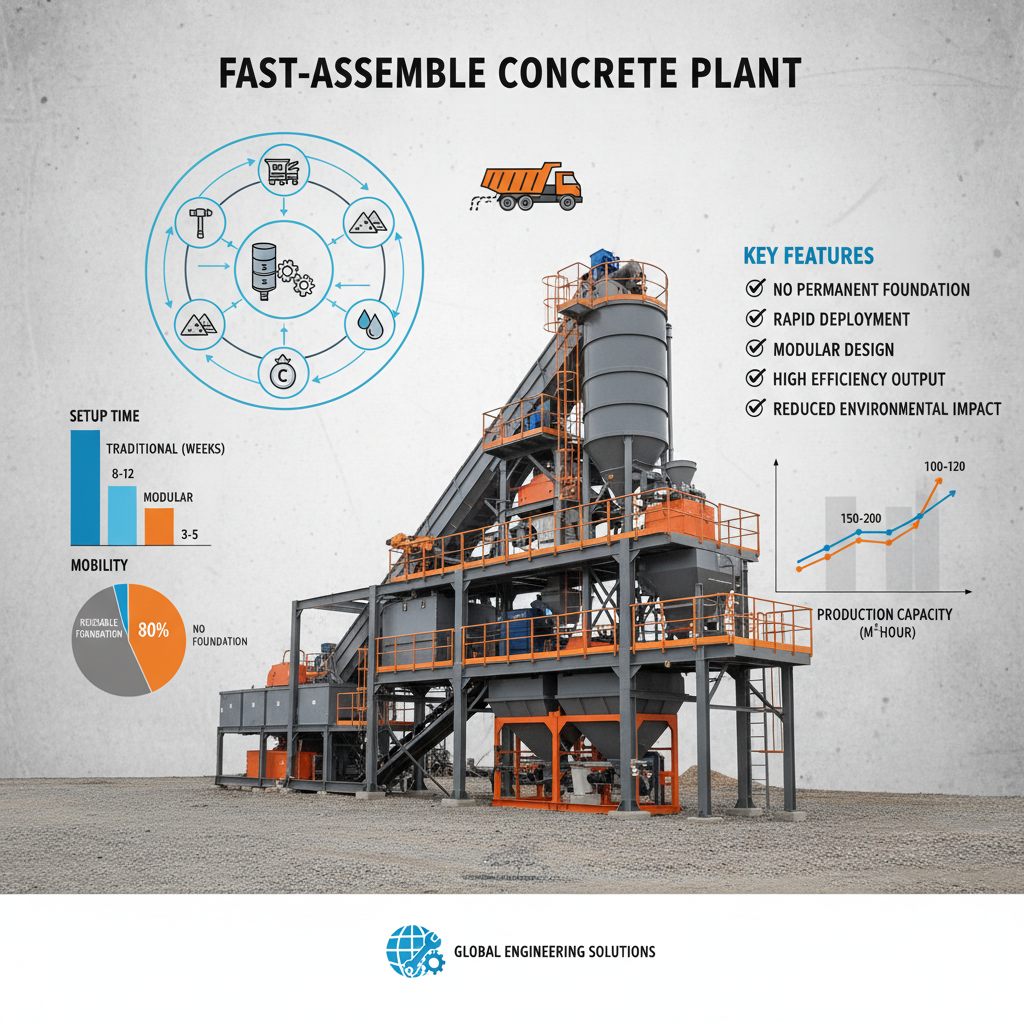
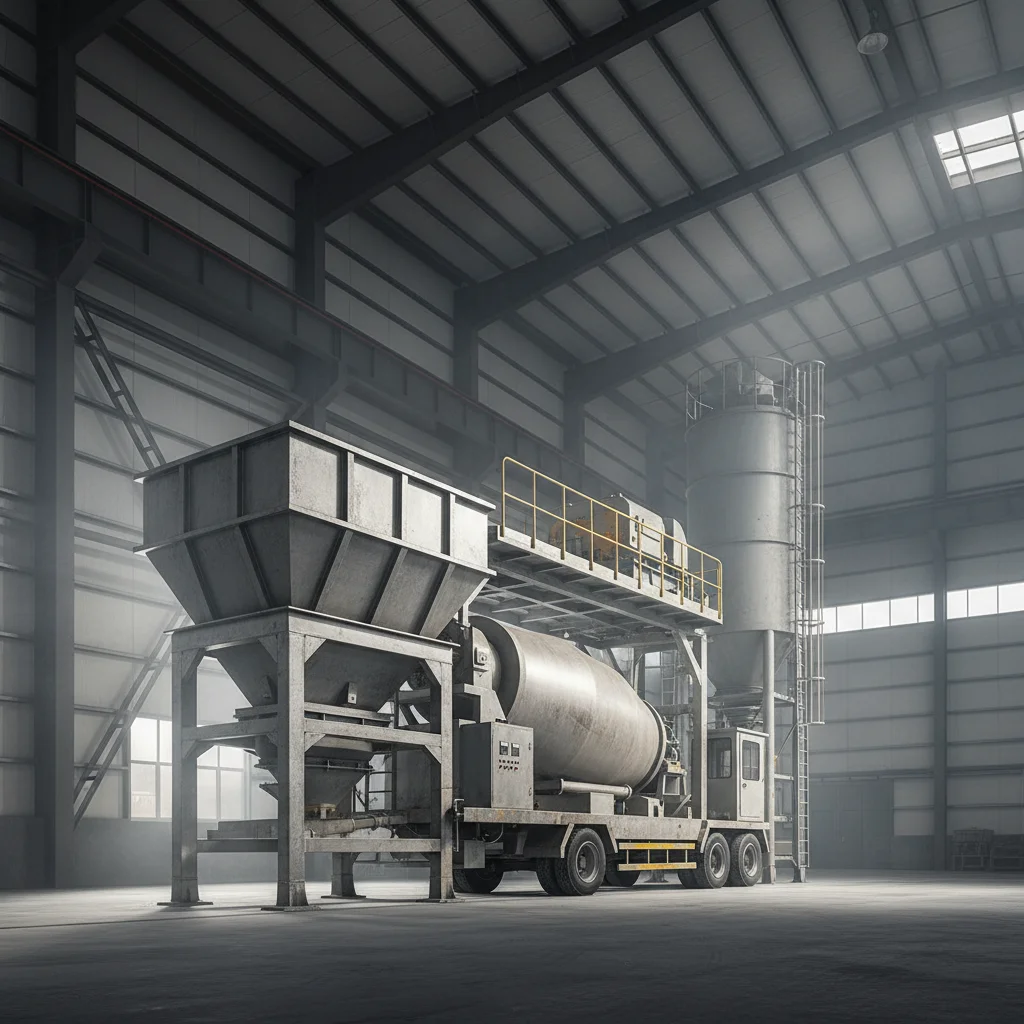
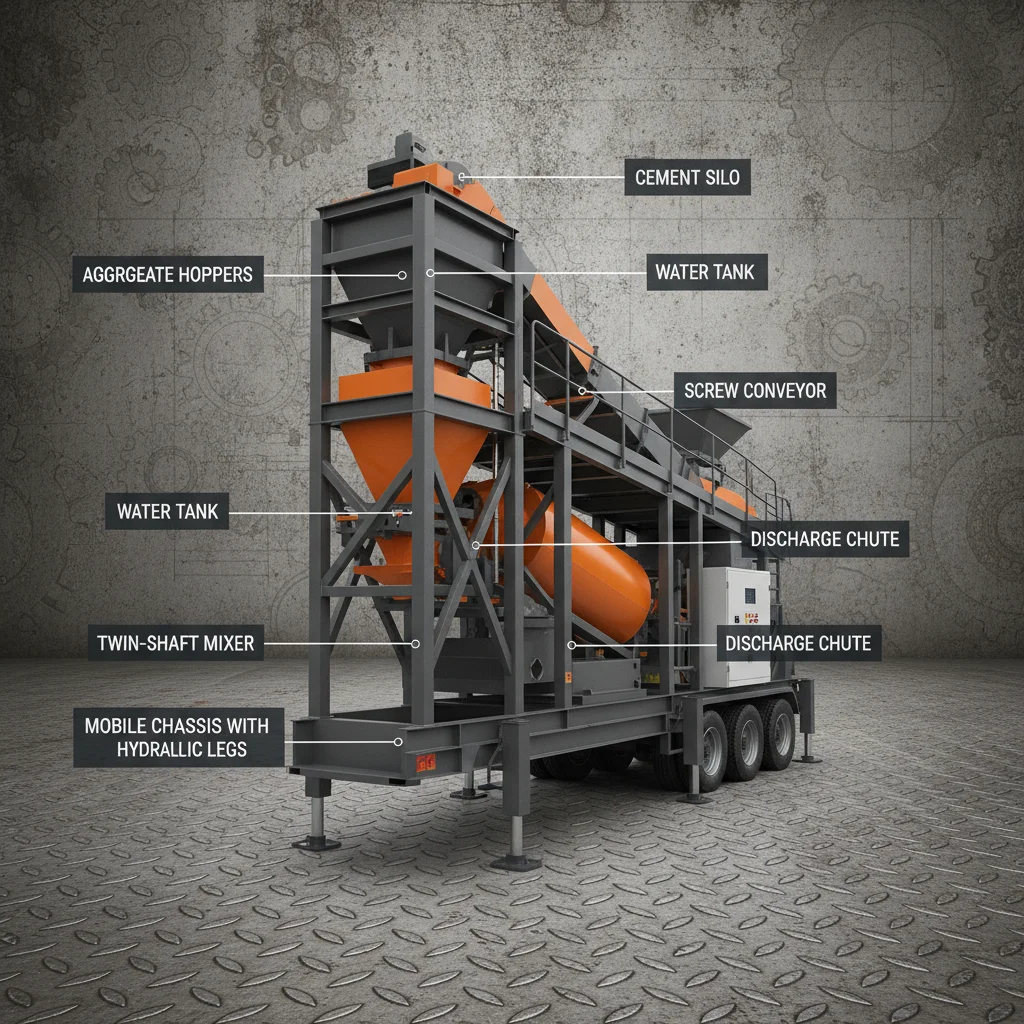
Simply put, a foundation-free fast-assemble concrete plant is a mobile concrete batching plant that doesn't require a traditional concrete foundation for installation. It's designed to be quickly assembled and disassembled, making it ideal for temporary or remote construction sites. The key is a structural framework, often constructed from heavy-duty steel, that provides stability without needing to be anchored to the ground. Think of it like a sophisticated, robust LEGO set for concrete production.
This technology bridges the gap between traditional, stationary plants and smaller, mobile mixers. Traditional plants offer high capacity but require significant upfront investment and site preparation. Mobile mixers are convenient but lack the capacity for larger projects. A foundation-free plant offers a sweet spot: substantial production capacity with the flexibility of a mobile setup. It's perfect for medium-sized projects or as a supplementary plant to an existing operation.
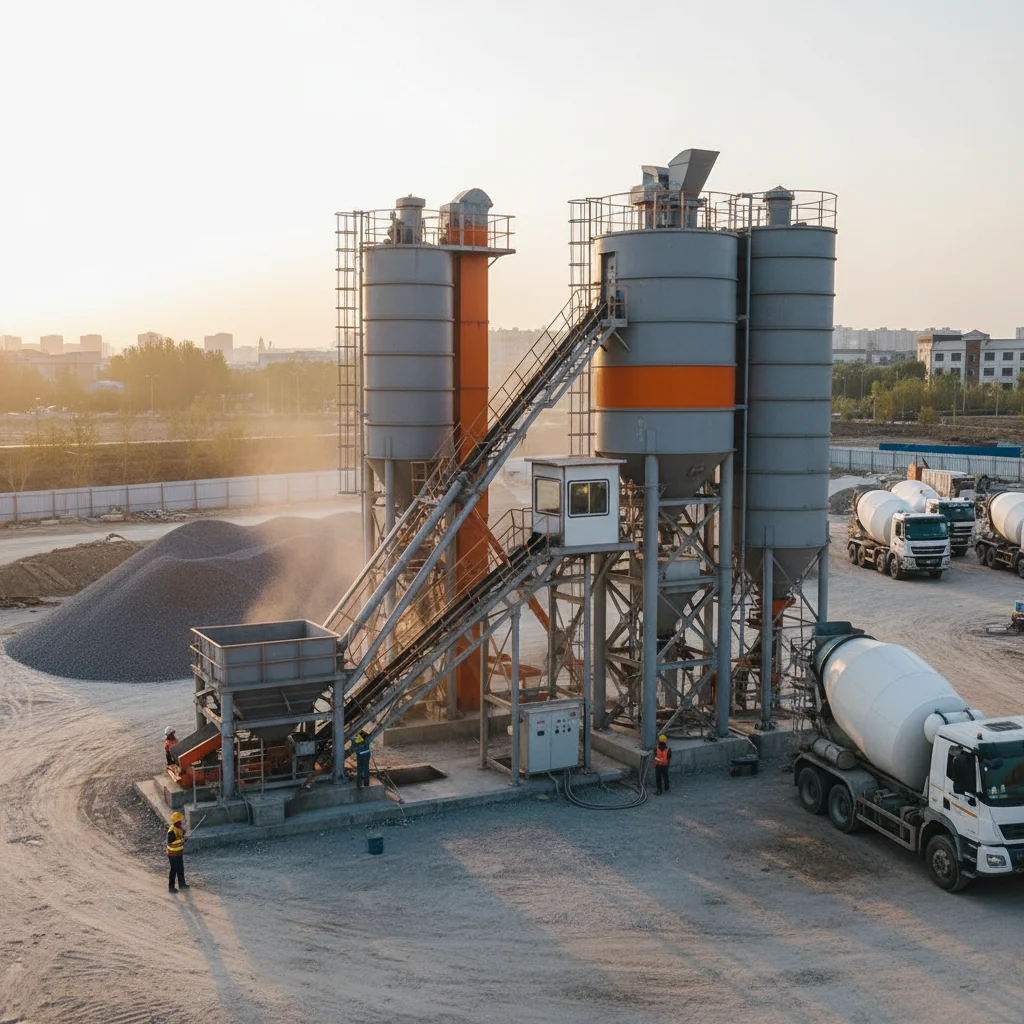
This isn't just about skipping a concrete pour. It's about a complete system – silos for aggregate storage, mixers, cement storage, control systems, and often, water recycling capabilities – all designed to be easily transported and assembled. The materials are chosen to withstand the rigors of transportation and repeated assembly/disassembly.
Core Components and Operational Factors
The heart of any foundation-free plant is its modular design. Silos, mixers, control cabins – everything is built in sections that can be easily connected. This modularity also simplifies maintenance and repairs. If a component fails, you can quickly replace it without shutting down the entire plant. The steel framework is critical, providing the structural integrity needed to support the weight of the components and withstand wind loads. It’s built to code, of course, but we still double-check everything on site.
Another key factor is the control system. Modern plants utilize PLC-based automation, allowing for precise batching and monitoring of the concrete mix. This ensures consistent quality and reduces the risk of errors. We've seen a move towards remote monitoring and control, allowing operators to manage the plant from a central location. And frankly, that's a lifesaver when you're dealing with multiple sites simultaneously.
Finally, transportation logistics are huge. These plants are designed to be transportable, but you still need a solid plan for moving the components from the manufacturer to the site, and potentially between sites. We always factor in road conditions, weight restrictions, and permitting requirements. A seemingly small logistical oversight can quickly derail a project.
Key Performance Indicators for Foundation-Free Plants
When evaluating a foundation-free plant, we look at several key performance indicators. First, assembly/disassembly time – how quickly can you get the plant up and running or packed up and moved? We're aiming for under a week for a complete setup. Second, concrete output capacity – how many cubic meters per hour can the plant produce? This depends on the size of the mixer and the overall plant configuration.
Then there's material waste – a well-designed plant minimizes waste through accurate batching and efficient material handling. We also track maintenance costs – how much downtime and expense are associated with keeping the plant operational? And finally, of course, cost per cubic meter of concrete produced – the ultimate measure of efficiency.
Foundation-Free Fast-Assemble Concrete Plant KPI Comparison
Global Deployment and Application Scenarios
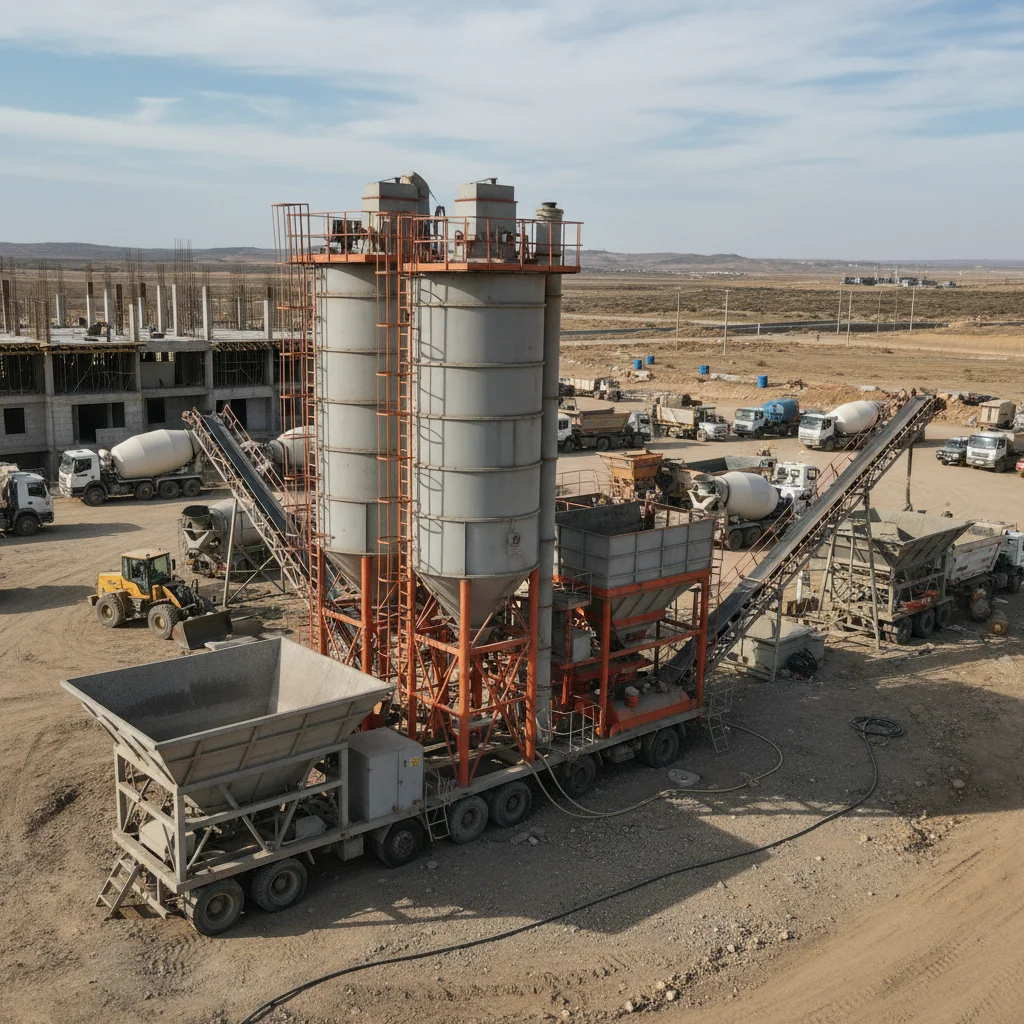
I’ve seen these plants deployed in some pretty challenging locations. In post-disaster relief operations, they've been invaluable for quickly establishing a concrete supply to rebuild infrastructure. Think about Haiti after the earthquake, or the Philippines after a typhoon. Speed is critical in those situations, and a foundation-free plant can be operational within days.
They're also ideal for remote industrial zones – mining operations in Australia, construction projects in the Alaskan wilderness, or infrastructure development in Africa. Anywhere getting concrete delivered is expensive or logistically difficult. We’ve even used them for large-scale infrastructure projects where a temporary, mobile plant offered greater flexibility than a permanent installation.
Long-Term Advantages and Return on Investment
The upfront cost of a foundation-free plant is often higher than a smaller, mobile mixer. But when you factor in the reduced site preparation costs, faster deployment, and increased production capacity, the ROI is significant. We’ve seen projects recoup the initial investment within a year, simply through savings on labor and transportation.
Beyond the financial benefits, there's a sustainability aspect. Reducing the need for concrete transportation lowers carbon emissions. And the modular design allows for easy upgrades and modifications, extending the lifespan of the plant. Ultimately, it's about building more efficiently, sustainably, and cost-effectively.
There's a real human element too. Faster project completion means communities get access to essential infrastructure sooner. It creates jobs and stimulates economic growth. It's not just about concrete; it's about building a better future.
Future Trends and Emerging Innovations
We’re starting to see integration of AI and machine learning into plant control systems, optimizing batching and predicting maintenance needs. There’s also a push towards incorporating alternative cementitious materials – fly ash, slag, and other byproducts – to reduce the environmental impact of concrete production.
I’m particularly excited about the potential of using 3D printing technology in conjunction with these plants. Imagine printing customized concrete components on-site, reducing waste and accelerating construction even further. And of course, the continued development of sustainable energy sources – solar and wind power – to power these plants off-grid.
The future of concrete production is about being smarter, more efficient, and more sustainable. Foundation-free fast-assemble concrete plants are a key part of that future.
Key Considerations for Foundation-Free Plant Operation & Maintenance
| Component |
Maintenance Frequency |
Potential Issues |
Preventative Measures |
| Mixer Drum |
Monthly |
Wear and tear, blade damage |
Regular lubrication, blade inspection and replacement |
| Aggregate Silos |
Quarterly |
Material buildup, corrosion |
Internal cleaning, protective coating application |
| Cement Silos |
Bi-Annually |
Bridging, material hardening |
Fluidization aids, regular tapping |
| Control System |
Weekly |
Software glitches, sensor failures |
Software updates, sensor calibration |
| Structural Framework |
Annually |
Corrosion, bolt loosening |
Inspection, corrosion protection, bolt tightening |
| Hydraulic System |
Monthly |
Leaks, pump failures |
Fluid level checks, hose inspection, pump maintenance |
FAQS
The biggest advantages are speed of deployment and flexibility. A traditional plant requires significant groundwork and permitting, taking weeks or even months to get operational. A foundation-free plant can be up and running in a matter of days, and can be easily relocated as project needs change. This translates to significant cost savings and reduced project timelines, especially valuable in remote or emergency situations.
While mobile mixers offer convenience, they typically have a much lower output capacity than a foundation-free plant. A foundation-free plant can produce significantly more concrete per hour, making it suitable for medium to large-scale projects. It also offers greater control over mix design and quality, something often lacking with smaller mobile mixers.
These plants are designed to be adaptable to various ground conditions, including uneven terrain and challenging soil types. The structural framework distributes the weight of the plant, minimizing the need for extensive site preparation. However, extremely unstable or swampy ground may require some localized reinforcement or ground stabilization measures.
The structural integrity is achieved through a robust steel framework designed to withstand loads and environmental factors like wind. The framework is carefully engineered and often incorporates outriggers or bracing to provide additional stability. Plants are designed and certified to meet relevant safety standards and building codes. Regular inspection and maintenance are crucial to maintaining this integrity.
Maintenance requirements are similar to those of a traditional concrete plant, including regular inspection and lubrication of moving parts, cleaning of silos, and calibration of control systems. Because it’s designed for portability, there’s added importance on inspecting the structural framework for signs of wear or damage during transport and assembly/disassembly.
Foundation-free plants can have a lower environmental impact compared to traditional plants due to reduced site preparation and minimized concrete usage. The ability to produce concrete closer to the point of use reduces transportation emissions. Many plants also incorporate water recycling systems and are designed to accommodate the use of alternative cementitious materials, further reducing their environmental footprint.
Conclusion
Foundation-free fast-assemble concrete plants represent a significant advancement in concrete production technology. They offer a compelling combination of speed, flexibility, cost-effectiveness, and sustainability, addressing key challenges faced by the construction industry today. From rapid disaster response to remote infrastructure projects, these plants are proving their value in a wide range of applications. They're not just about making concrete; they’re about building a more efficient and resilient future.
As the demand for infrastructure continues to grow, and as we face increasing pressure to reduce our environmental impact, foundation-free technology will undoubtedly play a crucial role. Investing in these plants isn't just a smart business decision; it's an investment in innovation and a commitment to building a better world. foundation-free fast-assemble concrete plant is leading the way, offering cutting-edge solutions for a changing industry.